
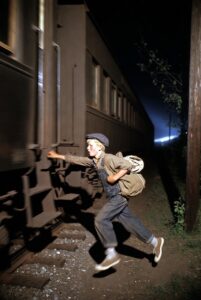
Dorothy Britt tells her story.
Chapter Three
Belle’s phone rang. She turned down the radio, caught the phone on the third ring, and answered sweetly as always. Tom heard her say thank you, then hang up. Her heels clicked across the heart pine floor. She leaned partway around the door.
“Tom, Mrs. Britt is here early, and she’s coming up. Sonia said she’s crying.”
Tom muttered a mild curse. He hated the crying ones worst of all.
“Bring her on in,” he said. The step creaked quietly on the staircase— apparently she was wearing soft shoes, because he didn’t hear the tapping of heels. Kind of unusual, but not very.
“Mrs. Britt? I’m Belle Quinn. Mr. Cutchin is waiting for you. Could I get you a cup of coffee?”
“Please.”
“I’ll bring it right in,” Belle said. She knocked on the open door.
“Tom? Mrs. Britt.” Belle’s eyes had the soft look she got for the bad ones, but her face was composed. Tom stood, straightened his vest, and took the three steps to the door.
She was a slender woman, wearing what had been an expensive dress and a cloche hat. Both had seen better days. The purple dress, which seemed a couple sizes too big, looked like silk. There was a stain near one knee, and a small tear. She wore no stockings, and she was wearing tennis shoes, of all things. They had once been white. Brown, almost black hair, bobbed, neat but in need of a trip to the beauty parlor. She clutched a large but simple purse in a death grip. Well worn but not shabby.
Dorothy Britt had dark circles under her eyes, and no makeup. There was a bruise on one cheek. She was much younger than Tom expected — early twenties, maybe even younger? — and looked like she hadn’t had a decent meal in weeks. Just a few pounds, and she would be a stunning woman. As it was, she was still a looker, but the kind a man wanted to protect, rather than romance.
Tom gently took her hand. She was a petite woman, shorter than Belle.
“I am Tom Cutchin, Mrs. Britt. Pleasure to meet you. Please have a seat.”
She glanced about the room, missing nothing, and took the straight back chair, moving it slightly so she could see the door.
Careful, humble, scared, Tom thought to himself. That kind of husband trouble. He kept his face neutral.
“I appreciate you seeing me on short notice, Mr. Cutchin,” she said. Her voice was soft and low, a voice that could have been soothing or even sultry under other circumstances.
“No problem at all.” Belle brought the coffee server in, placed it beside the brass bar from the Mudhen.
“You need milk and sugar, dear?”
“Pl-please, Mrs. Quinn.” Belle patted her hand, squeezed it slightly. Tom noticed that Dorothy Britt had to keep from flinching.
“You just call me Belle. You look like a girl who can use a friend.”
Dorothy Britt gripped the coffee cup, and looked up from under the cloche at Belle. Tom thought he saw her shoulders relax slightly, as if she had made a decision. Like everyone who met Belle, Dorothy Britt had decided she could trust Belle. Tom winked a thank you to her. Belle gave no reaction.
“Thank you, Mrs. — Belle. I’m Dorothy.”
“There we go,” Belle purred. “I’ll be right out here if you need me, Tom.” She started to close the door, and Tom shook his head ever so slightly. Belle nodded, and left it open.
“Miss Dorothy,” Tom said, “how can I help you?”
“You’re a detective? A-a private detective?”
“Yes m’am. I couldn’t find any honest work, and they tell me I am too old to swing an axe at the CCC camp.” The weak joke earned a weaker smile.
“I need..I mean, my — my husband is missing, and I think he might be dead.” Tears welled in the big dark eyes, and Tom immediately slid a package of tissues across the desk. She took one, and dabbed her eyes.
“I certainly hope not, Miss Dorothy. Why do you say that?” She stared at the coffee cup, and the words came spilling out.
“He was involved with some men, business,” she said. “I never knew exactly what was going on, and he wouldn’t tell me. They always had a lot of cash. And guns—they all carried guns. The one in charge always wears a green hat. John went to meet another man in Wilmington last week, like he always does, and never came back.
“We live in a little cottage on Divine Street. I’m scared to go back there right now.”
“How long have you lived there, Miss Dorothy?”
“Th-three months. It was set up before we got here. John’s work takes him a lot of places. We got here right before the tobacco market opened. John was a loan officer at a bank until the crash. We had a nice little house in Lumberton, but when the bank closed, we lost it.” She looked down at her hands again. “He met these men right before or after, I’m not sure. It was crazy then, you know?
“We stayed with my parents in Fair Bluff for a while, then John met a man in Wilmington who gave him a job. We moved here, and he got a telegram one day. He met these men, the one with a green hat, and they talked a long time.” She stifled a sob.
“I’m sorry. I don’t mean to be so scatterbrained. Where was I?”
“It’s okay,” Tom said gently. “You take your time. Take a deep breath. How did you find your house here?” She inhaled, closed her eyes, and the words began pouring out again.
“We rent from Mrs. George — did I say it’s on Divine Street? John got two keys in the mail, and the address. We took the train the next day, and the house was ready for us. A man John knew was at the train station, and drove us over.
“It was nice for a few weeks. We went to the movies, and went window shopping. He took me out to dinner almost every night. When I asked about all the money we were spending, John said he had been paid in advance, a bonus of some kind. I didn’t ask. I guess I should have.
“The man in the green hat, and the policeman, they came by the house a couple days before John disappeared. John sent me to the store, so they could talk in private. I heard them yelling before I was down the block. Later he told me it was all straightened out, but wouldn’t tell me any more.
“The men didn’t turn up again. I thought maybe John had gotten a new job. He is always working some kind of big deal, you know? I figured that was why they were angry with him. He was kind of nervous after that, but said he was just tired.
“Then he just headed out the other day. And never came back.
“I called the police, finally, but they never came by. Then the man in the green hat came to our house and said if I didn’t give him the book, he would— he would—hurt me.”
“What kind of book?” She shrugged.
“I don’t know. John never carried anything like that, and I never saw any kind of book they might want around the house. John was always going over account books for his boss, but he always delivered them when he was finished, and another would come by express or he’d pick it up. There wasn’t anything at the house when that man came by. I told the man that, and he just laughed.
“The man, he slapped me, so I hit him with a flower vase. Broke the vase, and it cut him, I think. He fell down, and tried to grab me. Tore my dress, but I got away. I grabbed my purse with my mad money and ran out the back door, but there were men waiting out back. They blindfolded me after they shoved me in a car— a red car, four-door — and drove out of town to an old house.
“It was an old tenant house, on a farm, I think. I could smell animals. They let me keep my purse, and I crawled out a window in the night, when they were all drinking.”
Tom reached across the desk and covered her hands with his own.
“I know this is hard, Miss Dorothy. I appreciate you trusting me. Did they — hurt you in any way?” she shook her head.
“No, not like that, but one of them wanted to. He said some of the dirtiest things, nasty things, but the one in charge, the one I hurt, said that they had been told to keep me safe, that I belonged to someone else.” The tears were flowing freely as she wrung her hands and blushed.
“Mr. Cutchin, I don’t belong to anyone except my husband! I’ve never even been with any other man!” She sobbed and turned away, crying into another tissue.
Tom tapped a Chesterfield out of the pack, and offered it to the scared young woman. She shook her head.
“I don’t smoke, but I like the smell. John— my husband—sometimes smokes that kind. I guess he still does.” Tom drew on the cigarette, and looked out the window. Two kids were fishing on the opposite bank. Life going on as usual. He had fished in the exact spot hundreds of times.
“Have you talked to the police, Miss Dorothy?” She shuddered, and shook her head.
“No—the one who said those things to me — he is a policeman. He wasn’t in uniform, but I’ve seen him before.” Tom stopped writing.
“Are you sure, Mrs. Britt?” He kept his tone gentle, and watched her eyes. The violet shadows would almost be pretty were it not for the circumstances.
She nodded, vehemently.
“When I ran away, one of them told the others to go find a phone and call him at the police department. He said a name, but I didn’t catch it. I was too scared.”
Tom tried to keep his face neutral as she told the story.
She had lost a shoe fighting the kidnappers at her house, and they threw the other one out the car window. She stubbed her toe badly enough to bleed at the farmhouse when she knocked over a bucket by an old well, and it made a noise that the men noticed. Dorothy said she ran across an overgrown yard, then tripped on a rusty barbed wire fence. The kidnappers had a flashlight that they were shining in the other direction. One of them spun tires out of the yard, heading down a dirt lane that ended at a shell road. She said she heard the shells crackling as he drove away.
Dorothy said she made her way through a narrow stretch of trees, and hid on the edge of a cornfield beside a clay road. She blushed when she said she left the remains of her stockings there. She waited til she saw headlights, and crept across a ditch, then knelt in the weeds until she was sure it wasn’t the red car returning. It was a truck.
“I ran to the highway—I didn’t know where I was — but an old man and his wife stopped in a truck. He is a preacher at a church near Sardis Grove. His wife, she-she had a box they were taking to the County Home, and gave me these shoes.
“I knew I couldn’t go home, so I had them drop me at the Walter Hotel. But —but they wouldn’t let me register, since I was by-by myself and it was late at night. Said they wanted to call my h-h-husband.” She laughed, a bitter, scared laugh that threatened to turn into a scream. “I have money. Plenty of money. And they held that against me, too. Thought I was some kind of bad woman. I guess I looked a fright, and when I started making a scene, they made me leave.
“I just wandered round after that. I slept for a little while in a shed at the Baptist church cemetery, but I ran away when somebody went there this morning. I was hungry, so I went to the diner on Chestnut, the one with the nice Greek family. They let me wash up in the ladies. Wouldn’t take anything for my breakfast, but I was so nervous I just had some toast and coffee.
“I bought the first paper I could find, and I saw your advertisement.” Her hands shook as she picked up her coffee cup and took another sip. “That’s it.”
Tom didn’t think it was, but he expected she would hold something back for the time being.
“I am so sorry you had to go through all that, Mrs. Britt. Now, I need some basic information, if you’re up to it.” She nodded, eyes wide. “What’s your husband’s full name?”
And so it began.
John Robert Britt. Age 29. Brown eyes, black hair. Light acne scars. Five nine or ten, one-thirty pounds. Occupation, business man. Burn scar from childhood on right forearm. Last seen in a tan suit, matching fedora, blue broadcloth shirt, silver cuff links (“a wedding present from my father,” she said, and began crying softly again), narrow black tie. The last time she saw him was four days before, Monday, just before seven in the morning. No, they didn’t have a car.
Tom scratched out notes on the pad, more to reassure her than anything. It was an incredible story, but he had heard stranger things, especially since New Lisbon suddenly started blooming.
Next time: Tom confirms his worst suspicion, and starts following the trail of John Robert Britt.
